
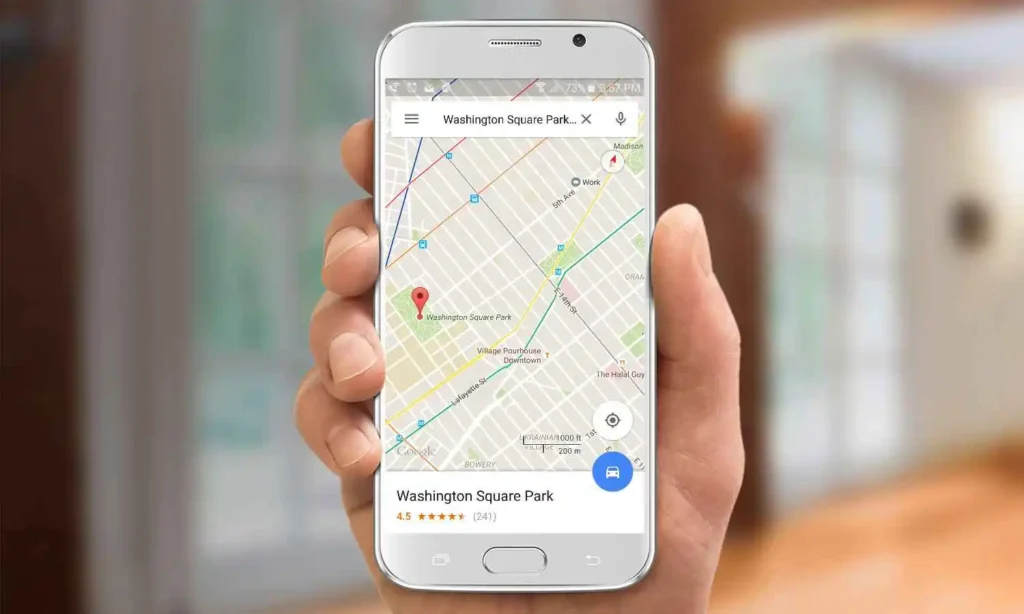
A few weeks back, a restaurant owner in Dhanmondi told me he’d spent BDT 80,000 over six months on “SEO services” and still couldn’t show up when someone searched biryani near me from inside his own neighborhood. His agency had built him a website. They’d “optimized his keywords.” They’d never claimed his Google Business Profile.
That’s local SEO Bangladesh in a nutshell. Most businesses are paying for the wrong thing.
I’ve spent six years doing SEO out of Mirpur, Dhaka. I work with clients ranging from local shops to ecommerce brands selling across the country. Local SEO here looks almost nothing like the playbooks you read on Moz or Search Engine Journal — because Bangladesh isn’t America. Mobile data is slow. Map data is patchy in places. Bengali queries get treated differently than English ones. Half the local citation sites Western SEOs swear by don’t exist here, and the ones that do barely move rankings. Customers often trust a Facebook page more than a Google listing.
This guide is what I actually do for clients in 2026. Not what someone in California says you should do.
What local SEO Bangladesh Actually Means
Local SEO in Bangladesh is the practice of optimizing a business’s online presence so it ranks for geographically targeted searches — primarily on Google Maps, the local pack, and “near me” queries — across both Bengali and English language searches inside the Bangladesh market.
In practice, that means three things: showing up in the three-result map pack at the top of Google, ranking organically for service-plus-location queries (think carpet cleaning Gulshan or AC repair Mirpur), and being visible when users tap into Google Maps directly to find a nearby business.
Local SEO is not general SEO. It’s a parallel discipline with its own ranking factors, its own primary platform (Google Business Profile, not your website), and its own measurement standards. A site that ranks #1 for “best biryani Dhaka” but has a poorly set up Google Business Profile will lose to a competitor with a worse website but a properly optimized profile in nearly every map pack query.
Why local SEO matters in Bangladesh in 2026
I’ll say something most agencies in Dhaka won’t: local SEO is the most undervalued marketing channel in Bangladesh right now. Not because nobody talks about it — they do — but because almost nobody executes it properly.
Here’s what’s changed in the last two years. Google rolled out AI Overviews to Bangladesh users. Those AI summaries pull heavily from Google Business Profile data, reviews, and local schema. If your GBP is half-empty and your website has no LocalBusiness schema, you’re invisible to the part of Google that’s growing fastest. AI search isn’t a future problem in Bangladesh; it’s a present problem most local businesses haven’t noticed yet.
The mobile reality matters too. Most local searches in Bangladesh happen on phones, often on slower 4G connections, often while the user is already on the move. People tap the first Maps result. They don’t scroll past the map pack. They don’t read the third organic result. The map pack isn’t a feature of local search in Bangladesh — it is local search for the majority of queries.
The economics work. A well-executed local SEO setup for a single-location service business in Dhaka costs less than running boosted Facebook posts for two months. Once it’s working, the calls keep coming without ad spend. That’s the part most owners don’t believe until they see it on their own listing.
The contrarian take I’ll stake here: Facebook still drives more leads than Google for many local businesses in Bangladesh, and that won’t change tomorrow. But the gap is narrowing every quarter, and the businesses dominating local search now will own the map pack when Google catches up culturally with the West. The window for cheap dominance closes a little more each year.
The Foundations
If you only do five things, do these. In order.
Google Business Profile
Google Business Profile (GBP) is the single biggest lever in local SEO. It’s also free. Yet most of the small businesses I audit in Dhaka have either an unclaimed listing, a duplicate listing, or a profile so under-optimized it might as well be invisible.
Claim your profile. Verify it — Google now allows video verification in Bangladesh for most categories, which is faster than the postcard method that used to take weeks. Then fill out every field. Not most. Every.
The fields that move the needle most: primary category (this is the single most important field — get it wrong and you won’t rank for anything relevant), secondary categories (3 to 5 relevant ones), business description with your primary keyword used naturally once, full hours including holidays, services list with descriptions, and photos. A lot of photos. Real ones, not stock images. I aim for 25+ on a new profile and at least 2 to 3 new ones uploaded monthly.
Bangladesh-specific fields worth setting: payment methods (include bKash and Nagad if you accept them — there are custom attributes for this), languages spoken (Bengali, English, sometimes Hindi), and accessibility features.
The “products” and “services” sections are massively underused. Each item you add becomes a mini-page on your profile that can rank for specific queries. If you sell five service categories, create five service entries with full descriptions. This is free real estate.
For a deeper walkthrough of every field and how to optimize it, I’ve written a dedicated guide on Google Business Profile optimization for Bangladeshi businesses.
NAP Consistency
NAP stands for Name, Address, Phone. The principle is simple: every place your business appears online should show identical NAP information. The execution in Bangladesh is brutal.
Most businesses I audit have at least three Facebook pages, two of which they didn’t know existed (created by ex-employees or ex-agencies). Each page has a slightly different address — “Road 7, Dhanmondi” on one, “House 14, Road 7, Dhanmondi 1209” on another, “Dhanmondi 7” on a third. Google cross-references these. Inconsistency tells Google’s algorithm that the business identity is uncertain, and uncertain businesses don’t rank.
The fix: pick one canonical NAP format. Write it down. Update it everywhere — Facebook, Google Business Profile, your website footer, your website schema, every directory you appear on. If a directory has wrong information and you can’t claim or edit it, contact them. If they won’t fix it, the listing might be hurting more than helping.
On-Page Local Signals
Your website tells Google where you operate and what you do. Most websites in Bangladesh tell Google neither.
The non-negotiables: a clear address in the footer (with proper formatting), a contact page with embedded Google Maps showing your exact location, dedicated location pages if you serve multiple areas, and LocalBusiness schema markup on your homepage and contact page.
Local schema is criminally underused in Bangladesh. I rarely see it implemented even on agency-built sites costing six figures BDT. Adding LocalBusiness schema with your full address, geo coordinates, opening hours, and phone number gives Google a structured-data signal that no amount of body copy can replace. I’ve watched rankings improve within two weeks just from adding schema to sites that previously had none.
Service pages should target service-plus-location keywords. If you do AC repair in Banani, you need a page targeting “AC repair Banani” — not just a general “AC repair” page. Google’s local algorithm treats these as fundamentally different queries.
Reviews and Review Velocity
Reviews matter more in Bangladesh than they do in the West, in my experience. The trust deficit is higher. Customers are more cautious. A profile with 80 reviews averaging 4.7 stars converts dramatically better than one with 8 reviews at 5.0, even if the second has higher math.
Volume matters. Velocity matters more. Five reviews this month signals more to Google than fifty reviews from two years ago. I aim for at least 4 to 8 new reviews per month for active local clients, with response to every single one within 48 hours.
The bigger problem: most Bangladeshi small businesses don’t ask. They wait for reviews to happen organically. They don’t.
Build asking into your process. Send a follow-up SMS or WhatsApp message after service completion with a direct review link. Print the link as a QR code on receipts. Ask in person when the customer is happiest — usually right when they pay, after the service has gone well. Most won’t write a review later even if they meant to.
Never buy reviews. Google’s algorithm is decent at detecting them, and a wave of fake reviews from accounts with no review history triggers a manual penalty that can wipe out your visibility for months. I’ve seen it happen to two businesses in Dhanmondi this past year.
Local Citations
A citation is any online mention of your business’s NAP. Western SEO blogs make citation building sound like the foundation of local SEO. In Bangladesh, it’s the least important of the five foundations — but it still matters.
The reason: most general-purpose citation sites (Yelp, Yellow Pages, etc.) either don’t exist for Bangladesh or have minuscule traffic. Building 100 citations on dead directories does nothing.
What works in Bangladesh is locally relevant citations: industry-specific directories (Bproperty for real estate, Foodpanda for restaurants, Daraz seller listings for products), regional business directories that actually rank in Bangladesh search results, local newspaper online directories (Prothom Alo, Daily Star business sections), and chamber of commerce listings if your business qualifies.
I aim for 15 to 25 high-quality, locally-relevant citations rather than 200 low-quality ones. Quality over quantity is more true here than anywhere else. For a step-by-step approach, see my guide to local citation building in Bangladesh.
Advanced Local SEO Tactics for Bangladesh
This is where most agencies stop and where the real work begins.
Bengali-Language SEO
Most Bangladeshi local businesses optimize for English keywords only. This is the single biggest mistake I see at scale.
Bengali searches are growing faster than English searches in Bangladesh, especially among older demographics, smaller cities, and informal commerce. Google treats “ঢাকায় কার্পেট ক্লিনিং” and “carpet cleaning Dhaka” as different queries with different intent and different competition. Targeting both doubles your potential audience without doubling your work.
What I do: build parallel Bengali content for the highest-intent service pages. Same page structure, same schema, but with Bengali title tags, meta descriptions, headings, and body content. Add hreflang tags so Google knows these are language variants, not duplicates. Optimize the GBP services list with Bengali entries alongside English ones — Google handles this gracefully now, where it used to be messy two years ago.
The competition for Bengali local queries is dramatically thinner. I’ve watched clients land in the top three for high-intent Bengali queries within 6 to 8 weeks where English equivalents took 6 months. The ranking ceiling is lower because almost nobody is fighting for it.
Neighborhood-Level Targeting
Most Dhaka SEO targets “Dhaka.” That’s a city of 22 million people. Nobody searches “best dentist Dhaka” — they search “best dentist Dhanmondi” or “dentist near Lalmatia.”
Neighborhood-level targeting wins because the competition is thinner and the intent is sharper. Build dedicated neighborhood pages for every area you serve. Don’t fake it — only build pages for areas where you actually have a service presence. A page claiming you serve Uttara when your office is in Mirpur and you don’t go to Uttara will hurt you, not help.
Each neighborhood page needs unique content (not spun copies of each other), specific landmarks and references that prove local knowledge, and ideally a customer testimonial or example from that area. Google’s local algorithm got significantly better at detecting templated location pages over the last 18 months. The easy days of duplicating a page 30 times with city names swapped are over.
Map Pack Defense and Ranking Proximity
The Google Maps three-pack is influenced heavily by proximity to the searcher. A business 200m from the user beats a business 2km away in many queries, even if the closer business is less optimized.
This means rankings vary by location within a city. A business in Gulshan might rank #1 in the map pack for queries from Gulshan but disappear from queries 3km away in Banani. Standard rank trackers miss this entirely because they check from a single location.
The fix: tools like Local Falcon let you check rankings from a grid of locations across your service area. I run grid scans monthly for active local clients to identify dead zones — areas where the business is invisible despite serving them. Then I focus content, citations, and review acquisition geographically toward those weak zones.
There’s a tactic most don’t talk about: getting reviews from customers in different parts of your service area. A review mentioning “they came to my house in Dhanmondi” sends Google a soft signal that you operate there. Five reviews mentioning five different areas across your service zone strengthens map pack rankings across all of them.
Local Content Strategy
Local content isn’t blog posts about your industry. It’s content that proves you understand your local market and operate in it.
Examples I’ve used: a guide to power outage AC maintenance during Dhaka load-shedding for an HVAC client, a price comparison of common locksmith services across major Dhaka neighborhoods, a “what to do during waterlogging” guide for a flood-damage restoration service. The pattern: real local knowledge, written for real local situations, that competitors haven’t bothered to write because they don’t actually operate there.
These pages don’t need to rank for high-volume keywords to drive value. They send strong topical relevance signals to Google about your local expertise, get linked to organically by local bloggers and forums (in ways pure service pages never do), and convert better when found because they prove you understand the customer’s actual problem.
Reviews Response and Tone
Getting reviews is foundation work. Responding well is advanced work.
Every review needs a response. Within 48 hours. Even the negative ones — especially the negative ones. Public, professional responses to bad reviews convert browsers more than the original review repels them, because most people understand that nobody pleases everyone but only mature businesses respond well.
My rule: never respond defensively. Acknowledge the issue, explain what happened if relevant, offer to make it right offline, and thank them for the feedback. The response is for the next 100 people who’ll read it, not for the one person who left it.
For positive reviews, mention specific service details where appropriate. Generic “Thanks for the 5 stars!” responses miss an opportunity. Mentioning “glad we could fix the carpet stain in Banani so quickly” reinforces local relevance signals naturally and shows future customers what you actually do.
Common Local SEO mistakes I see in Bangladesh
These come up in nearly every audit I run.
- Multiple Facebook pages with conflicting NAP. Old employees create pages, agencies create pages, owners forget. Find them all, claim what you can, request removal of duplicates from Meta, then fix NAP everywhere. This single fix often produces visible ranking lifts within a month.
- Keyword-stuffed business names on GBP. Adding “Best AC Repair Dhanmondi” to your business name when your real business is “Cool Tech Services” violates Google’s guidelines and gets reported by competitors. Reports lead to suspensions. Use your real business name only.
- Buying reviews. It looks tempting because it’s faster, but the eventual cost is loss of visibility for months. Not worth it.
- Choosing the wrong primary GBP category. A Bangladeshi sweet shop choosing “Restaurant” instead of “Sweet Shop” will compete in the wrong universe. The primary category is the single biggest local ranking factor on GBP. Get this right or get nothing.
- Embedding the wrong Google Map on the contact page. Many websites embed a map of “Dhaka” rather than the business’s exact location. The embedded map should be the specific GBP listing’s map, generated from the share code on the actual profile.
- Generic services pages with no local context. “We offer professional AC repair services” is not a local page. Add the neighborhoods served, common local issues, response times, and area-specific examples.
- Treating local SEO as a one-time project. Profiles need ongoing posts, photos, reviews, and updates. A profile that hasn’t been touched in three months loses ranking weight to active competitors. This is the single biggest reason short-term agency engagements fail to produce lasting results.
- Focusing on directory submissions only. Submitting to 100 directories and calling it “local SEO” is the laziest version of this work. Most of those directories don’t rank, don’t pass authority, and don’t matter. Nineteen times out of twenty, that BDT 5,000 monthly directory package is a waste.
- Ignoring Google Posts. Free, indexed, and barely used. Posting weekly updates, offers, or events takes 10 minutes and adds fresh content signals to your profile.
- No tracking system. If you can’t see whether local SEO is working, you can’t fix what isn’t. Set up call tracking on your GBP, monitor Maps impressions and actions in Insights, and run grid rank checks monthly. What you can’t measure, you can’t manage.
Tools I actually Use
These are the tools I run for local SEO work in Bangladesh, what each is for, and roughly what they cost.
- Google Business Profile. Free. Non-negotiable. Use the dashboard for profile management, posts, Q&A monitoring, and Insights.
- Google Search Console. Free. The only honest source of organic search data for your website. Filter by country to Bangladesh and check Bengali queries separately from English ones.
- Google Analytics 4. Free. For traffic and conversion tracking. Ugly interface, essential data.
- Ahrefs. Around $129/month for the entry plan. I use it primarily for the Site Audit, the Keyword Explorer for local search volume estimates, and the backlink profile checker for citation discovery.
- Local Falcon. $20 to $60/month depending on scan volume. Grid-based map pack rank tracking. Built specifically for local rank visualization. Essential for any client where map pack is a primary channel.
- BrightLocal. Around $39/month for the Single plan. Citation tracking, local rank tracking, review monitoring. I use it for the citation audit feature more than anything.
- Whitespark. Around $20/month. Citation finder and builder. Their citation lists for non-US markets are stronger than competitors.
- Screaming Frog. Free up to 500 URLs, then £199/year. Essential for any technical local SEO audit. The schema validation extraction is what I use most.
- PageSpeed Insights. Free. Run every page that needs to rank. Bangladesh mobile network reality means a six-second-load page won’t rank no matter how perfect your content is.
- GBP Insights and the Performance reports. Free, inside the GBP dashboard. Track Maps impressions, search impressions, calls, direction requests, and website clicks weekly.
You don’t need every tool from day one. For a first month, GBP plus Search Console plus Local Falcon will tell you 80% of what’s working and what isn’t.
A Real Example: Pro Dry Carpet Cleaning
The cleanest local SEO case I can share with verifiable details isn’t a Bangladeshi business — it’s Pro Dry Carpet Cleaning, a local service business in Fort Lauderdale, Florida. The principles apply identically here. The market doesn’t change the playbook; only the channels and language do.
When I started working with Pro Dry, the business was generating limited inbound calls and ranking sporadically in the local pack across the Fort Lauderdale service area. The owner had a website, a Google Business Profile, and decent reviews — but nothing was tied together strategically.
The work I led across that engagement:
- Rebuilt the Google Business Profile from primary category to services, descriptions, and weekly posting cadence. Filled every field. Added 40+ photos over three months.
- Implemented LocalBusiness schema on the website with full geo coordinates, opening hours, and service area markup.
- Built dedicated neighborhood pages for the highest-value zip codes inside the service area, each with unique content and local references.
- Audited and fixed NAP across every meaningful citation source for Florida.
- Set up a systematic review request flow tied to job completion. Reviews acquired weekly from week one.
- Ran monthly Local Falcon grid scans to identify weak ranking zones and concentrated content + review acquisition there.
The results: 169 inbound calls per month from local search and an 80.2% Share of Local Voice across the Fort Lauderdale service area. Share of Local Voice measures the percentage of relevant local queries where the business appears in the top three results, across a geographic grid — at 80%+ the business effectively dominates its local search market.
Local SEO compounds. The compounds are slow at first, then unmistakable. Pro Dry didn’t hit those numbers in month two; it took the better part of a year to consolidate the position.
What translates directly to Bangladesh: every single tactic listed above. The platforms are the same. Google Business Profile is Google Business Profile. LocalBusiness schema is LocalBusiness schema. The differences are linguistic (Bengali parallels), citation source list (different directories), and review acquisition cadence (you’ll need to be more proactive in BD because customers ask for reviews far less spontaneously).
Frequently Asked Questions:
How long does local SEO take to work in Bangladesh?
Realistic timelines: 3 to 4 months for visible ranking improvements on a new GBP, 6 to 9 months for meaningful organic traffic gains on the website side, 9 to 12 months for dominant map pack positions across a service area. Bangladesh isn’t slower than other markets, but new profiles always take longer than profiles with existing history. Anyone promising “first page in 30 days” is selling you something else.
How much does local SEO cost in Bangladesh?
For a single-location service business, a credible local SEO engagement runs BDT 25,000 to 80,000/month (roughly $230 to $730 USD), depending on competition, scope, and whether content production is included. Below BDT 15,000/month, you’re typically getting directory submissions and not much else. Multi-location businesses or competitive verticals (real estate, healthcare, legal) cost more.
Is Google Business Profile free?
Yes, completely free. There is no paid version of GBP. Anyone charging you a “Google verification fee” or “premium listing fee” is running a scam — Google does not charge for listings, verification, or any feature within Google Business Profile. The only thing Google charges for is Google Ads, which is separate.
What’s the difference between local SEO and regular SEO?
Regular SEO targets queries without geographic intent (think “best DSLR camera”). Local SEO targets queries with geographic intent (“camera shop in New Market”) or proximity intent (“camera shop near me”). Local SEO relies primarily on Google Business Profile, NAP consistency, and reviews; regular SEO relies primarily on content, links, and on-page optimization. The skills overlap, but the playbooks are distinct.
Should I optimize for Bengali or English keywords?
Both, with priorities based on your actual customer mix. For most Dhaka-based businesses serving urban professionals, English queries drive higher volume currently but Bengali queries face thinner competition. For businesses outside Dhaka or serving older demographics, Bengali typically wins. The cheapest option is to optimize the highest-intent pages in both languages with proper hreflang implementation.
Do reviews really matter for ranking?
Yes, significantly. Review count, average rating, recency, and response rate are all confirmed local ranking factors. In Bangladesh, the conversion impact of reviews is even larger than the ranking impact — visitors with multiple options weight reviews heavily because the trust deficit in online services is real. A profile with 60 recent reviews at 4.6 stars typically outperforms one with 12 reviews at 5.0.
Can I do local SEO myself?
For the foundational work, yes. Claiming your GBP, filling out every field, fixing NAP across major sources, asking customers for reviews, and adding LocalBusiness schema to your site is doable for a non-specialist over 20 to 30 hours of focused work. The advanced layer — neighborhood content strategy, Bengali-English parallel optimization, map pack defense across a service area — is where most owners hit a ceiling and consider working with a local SEO consultant.
Why am I not showing up in the map pack even though my profile is verified?
Most likely causes, in order of frequency: wrong primary category, NAP inconsistencies across other listings, insufficient reviews compared to competitors in the area, distance from typical searcher location, GBP guidelines violation (often a keyword-stuffed business name), or a Google manual action you’re not aware of. Run a category check, review your competitors’ top three, and audit NAP across at least the top ten places your business appears.
Next Steps:
If you’ve read this far, you have the playbook. The work itself is the hard part.
Start with the foundation that has the highest ROI: claim and fully complete your Google Business Profile this week. Not next month. This week. If you do nothing else from this guide, that single action will move more rankings than anything else available to you.
After that:
- Audit your NAP across every public mention of your business and consolidate to a single canonical format.
- Add LocalBusiness schema to your homepage and contact page if you haven’t already.
- Build a review request system tied to your service delivery process and start asking every customer.
- If you have multiple service areas, plan out neighborhood pages built around real local context before publishing them.
- If your customers search in Bengali, plan parallel Bengali optimization for your highest-intent pages.
If you’d rather have someone do the work, that’s what I do. My local SEO services in Bangladesh are built around the playbook above — same priorities, same execution standards, same opinionated approach. You can read more about my broader SEO consulting work in Bangladesh if you’re considering a full-stack engagement.
The single thing I’d push back against if you’re going DIY: don’t underestimate how much execution speed compounds. Most local SEO failures aren’t strategic. They’re operational. Fields get half-filled. Reviews don’t get asked for. Posts don’t get scheduled. The competition isn’t beating you on tactics — they’re beating you on consistency. Whatever you do, do it weekly.